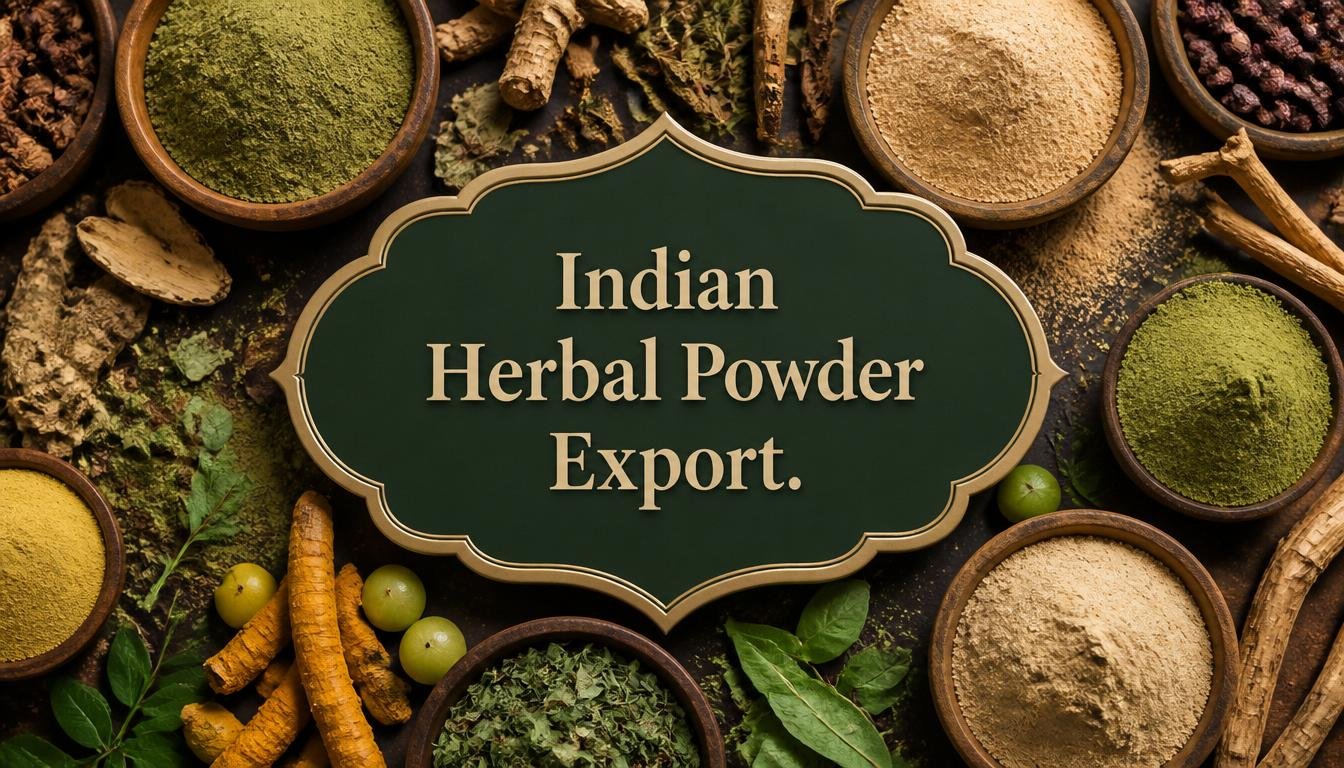
The global appetite for natural, plant-derived, clean-label ingredients has moved well past trend status into a structural shift in how food, beverage, supplement, and cosmetic brands formulate their products. Across nearly every market research segment tracking botanical and herbal powder ingredients, the same forces appear again and again: consumers actively choosing natural over synthetic even when natural costs more, regulators pushing food and beverage manufacturers away from artificial colours and additives, and a wellness industry that has matured from niche health stores into mainstream retail, e-commerce, and grocery chains.
India sits at the centre of this shift as the world’s primary source for the majority of the ingredients driving this growth. For B2B buyers — supplement brands, food and beverage manufacturers, cosmetic formulators, and private label businesses — understanding which Indian-origin herbal and spice powders are experiencing the strongest demand growth is directly useful information: it signals where supply may tighten, where prices may rise, and where building a reliable Indian supplier relationship now pays off before competition for raw material intensifies.
This guide ranks 10 Indian herbal and spice powders by current global export demand momentum, based on market research data, industry trend reporting, and observable shifts in international buyer enquiry patterns. For each, we cover what is driving the growth, which applications are expanding fastest, and what buyers should know when sourcing.
1. Ashwagandha Powder — The Adaptogen That Became Mainstream
Ashwagandha has completed one of the most remarkable journeys of any herbal ingredient in the past five years: from a niche Ayurvedic supplement known mainly to herbal medicine enthusiasts to a mainstream wellness ingredient recognised by a majority of supplement consumers. Industry tracking shows consumer awareness of ashwagandha rising sharply — the share of herbal supplement users who had never heard of it dropped from roughly a third in 2023 to under one in five by 2025, reflecting just how fast the ingredient has moved into the mainstream.
What’s driving growth: The global ashwagandha market was valued at approximately USD 837–848 million in 2025 and is projected to grow at a compound annual growth rate in the range of 9–12% through the early 2030s, driven by expanding applications across capsules, gummies, functional beverages, protein powders, and even dairy and yogurt products. The shift toward standardised, clinically validated extracts — particularly KSM-66 and similar high-withanolide formulations — has given the ingredient credibility with mainstream consumers who previously associated herbal supplements with weaker, unverified efficacy.
Fastest-growing applications: Sports nutrition and athletic recovery formulations (driven by ashwagandha’s cortisol-reduction and endurance benefits), functional beverages and energy drinks, gummies and chewable supplement formats targeting younger demographics, and stress/anxiety-focused wellness products responding to rising consumer mental health awareness.
What buyers should know: Demand growth is concentrated in standardised extract grades (2.5% and 5% withanolide content) rather than standard root powder, reflecting the formulation shift toward potency-verified, clinically-positioned products. Buyers planning long-term supply relationships should lock in supplier capacity now — withanolide-standardised extract production requires more sophisticated processing capability than standard powder, and not every Indian supplier has scaled this capacity to match demand growth.
2. Moringa Powder — From Superfood Trend to Clinically Validated Ingredient
Moringa has undergone a parallel but distinct evolution to ashwagandha: rather than rising primarily on consumer wellness trend momentum, moringa’s growth is increasingly underpinned by a expanding body of clinical research validating specific health benefits — a shift that is moving the ingredient from “trendy superfood” positioning toward genuine functional and even pharmaceutical-adjacent applications.
What’s driving growth: Recent clinical research has demonstrated meaningful effects from moringa supplementation — including measurable reductions in fasting blood glucose in type 2 diabetes patients, reduced inflammatory biomarkers, and significant reductions in LDL and total cholesterol in hypercholesteremic individuals. This emerging clinical validation is accelerating moringa’s adoption beyond general wellness retail into more clinically-positioned nutraceutical and even pharmaceutical research applications. Industry analysis projects moringa to lead the herbal ingredient segment with roughly a third of total market share within the broader herbal supplement category by 2025, reflecting its position as one of the highest-recognition botanical ingredients globally.
Fastest-growing applications: Blood sugar management and metabolic health supplement formulations, anti-inflammatory and cardiovascular health products, expanding pharmaceutical and clinical nutrition research applications, and continued strong growth in general greens/superfood blend categories. Germany has emerged as Europe’s largest moringa market, driven by the country’s mature herbal medicine culture and extensive health food retail infrastructure (DM, Rossmann, and Reformhaus chains).
What buyers should know: The clinical research trend is creating demand for moringa powder with verified, consistent bioactive compound profiles — buyers formulating products with specific health claims should prioritise suppliers who can document polyphenol, flavonoid, and glucosinolate content consistently across batches, not just protein and Vitamin C content. Organic certification is increasingly a baseline expectation rather than a premium differentiator in the German and broader European market specifically.
3. Hibiscus Powder — Riding the Natural Colorant Wave
Hibiscus powder’s growth trajectory is distinctive among herbal ingredients in that it is being driven as much by regulatory change and food technology trends as by direct consumer demand for the herb itself. As synthetic food dyes face increasing regulatory restriction and consumer rejection across multiple major markets, hibiscus has emerged as one of the leading natural alternatives for vibrant red colouring in food, beverage, and cosmetic applications.
What’s driving growth: The hibiscus flower powder market was valued at approximately USD 1.2 billion in 2025, with growth projections ranging from 4–9% CAGR depending on the specific market segment and timeframe, and functional beverage applications growing at over 9% annually — significantly faster than the category average. The convergence of three distinct demand drivers — natural colorant substitution, functional beverage expansion, and dietary supplement growth — is creating unusually broad-based demand momentum across multiple unrelated industries simultaneously.
Fastest-growing applications: Natural food colouring (directly substituting for banned or consumer-rejected synthetic red dyes), ready-to-mix functional beverage powders and sports nutrition blends, herbal tea blends (still the largest single application category at over 35% of demand), and cosmetic/skincare applications leveraging hibiscus’s natural acid content for exfoliation and brightening formulations.
What buyers should know: Regulatory change is creating real compliance complexity for EU-bound hibiscus — the European Commission’s updated Maximum Residue Level regulations for botanical products (effective January 2026) specifically affect hibiscus exporters, requiring stricter pesticide compliance verification for dried flower and powder shipments. This regulatory tightening is reinforcing a meaningful price premium for verified-compliant, certified-origin hibiscus suppliers over uncertified competitors — a trend buyers should expect to continue and should factor into long-term supplier selection. Organic-certified hibiscus already represents the majority of premium market volume in several major reports, signalling this is becoming the default specification rather than a niche premium option.
4. Turmeric Powder — The Established Leader Still Expanding
Turmeric occupies a unique position in this list: unlike the newer entrants experiencing dramatic percentage growth from a small base, turmeric is already one of the largest and most mature herbal/spice ingredients globally — yet it continues to show consistent, sustained demand growth driven by expanding application categories rather than simple volume increase in existing uses.
What’s driving growth: Turmeric’s curcumin compound continues to attract sustained research interest for anti-inflammatory and antioxidant applications, and its established consumer recognition (turmeric has near-universal awareness compared to newer entrants like ashwagandha or moringa) makes it a low-friction ingredient for brands looking to add a “health halo” without consumer education investment. The clean label movement has particularly benefited turmeric as a natural colorant alternative in addition to its functional positioning.
Fastest-growing applications: Joint health and anti-inflammatory supplement formulations, functional beverage and “golden milk” style product categories, continued expansion in standardised high-curcumin extract formats for clinical-grade applications, and natural food colouring applications parallel to hibiscus’s growth in this category.
What buyers should know: Demand growth is increasingly concentrated in higher-curcumin specification grades (5%+ curcumin and standardised 95% curcuminoid extracts) as formulators move beyond basic colouring/flavouring use toward functional positioning. Buyers should expect continued price stability advantage for standard food-grade turmeric (used in the largest volume application — general food colouring and flavouring) while premium high-curcumin grades see firmer pricing reflecting processing complexity.
5. Amla Powder — Vitamin C Positioning Drives Steady Growth
Amla (Indian gooseberry) has benefited from a broader global shift toward natural Vitamin C sources as an alternative to synthetic ascorbic acid in clean-label supplement and food formulations — a trend that has accelerated as more consumers scrutinise ingredient labels for synthetic additives.
What’s driving growth: Amla’s exceptionally high and notably heat-stable natural Vitamin C content positions it favourably against both synthetic ascorbic acid and competing natural Vitamin C sources (acerola, camu camu) in formulator decision-making, particularly given amla’s lower cost basis from India’s established cultivation infrastructure compared to South American alternatives. The broader Ayurvedic beauty and hair care trend (amla is foundational to traditional Indian hair care) has also expanded demand beyond pure nutraceutical applications into the cosmetics sector.
Fastest-growing applications: Natural Vitamin C supplement formulations, immunity-positioned functional food and beverage products, hair care and beauty supplement crossover products (the “beauty from within” trend pairing internal supplements with topical hair/skin applications), and continued strong demand from the traditional Ayurvedic wellness product category.
What buyers should know: Vitamin C content verification is the critical specification differentiator — buyers should require batch-specific COA testing for ascorbic acid content rather than relying on generic species-level claims, as amla’s Vitamin C content varies meaningfully based on harvest timing, processing method, and storage conditions.
6. Spirulina Powder — Sustained Growth in the Plant Protein Category
Spirulina continues to benefit from the broader, sustained global shift toward plant-based protein sources, reinforced by its position as one of the most protein-dense plant-based ingredients available — a credential that has become increasingly valuable as plant-based and flexitarian eating patterns continue expanding well beyond the vegan/vegetarian consumer base into mainstream “protein-conscious” demographics.
What’s driving growth: The convergence of three trends is sustaining strong spirulina demand: the plant protein category’s continued mainstream expansion, growing interest in natural blue food colouring (phycocyanin extraction) as synthetic blue dyes face the same regulatory and consumer pressure affecting red dye alternatives like hibiscus, and continued strong positioning in the broader greens/superfood supplement category alongside chlorella, wheatgrass, and barley grass.
Fastest-growing applications: Plant-based protein powder and blend formulations, natural blue colorant applications (a genuinely emerging high-value use case), sports nutrition and recovery products, and pet supplement formulations — a less-discussed but meaningfully growing application as pet owners extend “human-grade” wellness ingredient trends to animal nutrition.
What buyers should know: The natural colorant application specifically rewards suppliers who can demonstrate high, consistent phycocyanin content — this is a distinct specification from general protein-content spirulina and commands a different price tier. Buyers entering this specific application should clarify which grade they require explicitly, as standard food-grade spirulina may not meet colorant-application phycocyanin thresholds.
7. Giloy Powder — Post-Pandemic Immunity Positioning Sustains Momentum
Giloy (Tinospora cordifolia) experienced a dramatic demand surge during the global pandemic period as an immunity-focused Ayurvedic ingredient, and unlike some pandemic-driven ingredient trends that faded as acute health concerns receded, giloy has retained a meaningfully elevated baseline demand level compared to its pre-pandemic position — establishing itself as a mainstream immunity ingredient rather than reverting to niche Ayurvedic-only status.
What’s driving growth: Sustained consumer interest in proactive immune health support (rather than purely reactive illness-response supplementation) has kept giloy in active formulation rotation for immunity-positioned supplement brands well beyond the acute pandemic period. The ingredient has also benefited from broader Ayurvedic herb awareness growth — as consumers become more familiar with ashwagandha and other mainstream Ayurvedic herbs, willingness to try adjacent, less internationally familiar Ayurvedic ingredients like giloy increases.
Fastest-growing applications: General immunity support capsules and supplement blends, combination formulations pairing giloy with other immunity-positioned ingredients (Vitamin C sources, zinc, elderberry), and liver health/detox formulations leveraging giloy’s traditional Ayurvedic positioning in this category.
What buyers should know: As a less internationally established ingredient than ashwagandha or moringa, giloy sourcing requires particular attention to botanical authentication — plant part (stem-only is the traditional and correct specification) and species verification matter significantly given the ingredient’s lower overall market maturity and correspondingly less standardised global quality benchmarking compared to better-established Ayurvedic exports.
8. Beetroot Powder — Sports Nutrition Drives a Vegetable Powder into Superfood Territory
Beetroot powder represents an interesting category crossover — traditionally classified as a vegetable powder rather than a herbal/Ayurvedic ingredient, beetroot has effectively achieved superfood-tier demand growth driven almost entirely by sports science research into dietary nitrates and athletic performance.
What’s driving growth: Research into beetroot’s dietary nitrate content and its effects on cardiovascular efficiency and athletic endurance has driven significant adoption in sports nutrition formulations, an application category that barely existed for beetroot a decade ago. This sports nutrition-driven demand has, in turn, increased general consumer awareness of beetroot powder, supporting parallel growth in general health and natural food colouring applications.
Fastest-growing applications: Pre-workout and endurance sports nutrition formulations (the primary growth driver), natural red/magenta food colouring (directly competing with hibiscus and synthetic alternatives in this application), and cardiovascular health-positioned general wellness supplements.
What buyers should know: Dietary nitrate content — the specification driving the sports nutrition application specifically — varies significantly based on growing conditions, beetroot variety, and processing method. Buyers formulating for the sports nutrition category specifically should request nitrate content verification through ion chromatography testing rather than relying on general betalain/colour specifications, which are a separate quality parameter relevant to the colorant application rather than the performance application.
9. Bacopa Monnieri (Brahmi) Powder — The Cognitive Health Category Expands
Brahmi has benefited from one of the strongest sub-trends within the broader herbal supplement boom: the rapid expansion of the cognitive health and nootropic supplement category, which has grown from a niche biohacker-focused segment into a mainstream wellness category addressing memory, focus, and brain health concerns across a much broader consumer base, including ageing populations and students.
What’s driving growth: Herbal extracts collectively hold the largest share of the global brain health supplement market, and brahmi’s centuries of traditional use combined with growing scientific interest in its bacoside compounds has positioned it well within this expanding category. The broader trend toward stress management and mental wellness — alongside the cognitive health angle specifically — has created multiple simultaneous demand drivers for brahmi formulations.
Fastest-growing applications: Nootropic and cognitive health supplement stacks, student and professional focus-support products, combination formulations pairing brahmi with other cognitive-positioned botanicals (lion’s mane, rhodiola), and traditional Ayurvedic memory and concentration product lines.
What buyers should know: As covered in detail in our Ayurvedic herbal powder guide, confirming correct botanical species (Bacopa monnieri specifically, not Centella asiatica/Gotu Kola, which is sometimes marketed under similar regional naming) remains a critical sourcing verification step, particularly important now that demand growth is attracting a wider range of suppliers — including some with less rigorous botanical authentication practices — into the brahmi export market.
10. Tulsi (Holy Basil) Powder — Functional Tea and Adaptogen Crossover Growth
Tulsi has experienced strong, sustained growth at the intersection of two expanding categories: the functional herbal tea segment and the broader adaptogen/stress-management supplement trend, giving it dual-category demand momentum that has kept growth consistent even as individual trend cycles within the broader herbal supplement space have shifted.
What’s driving growth: Tulsi’s centuries-established role in Ayurvedic tradition as both a calming, stress-supportive herb and an immunity-supportive plant has translated cleanly into the modern functional tea and adaptogen supplement categories, both of which are experiencing strong independent growth. The functional/wellness tea category specifically has benefited from the same consumer shift away from sugary beverages that has driven hibiscus tea growth, creating positive spillover demand for tulsi as a complementary or alternative functional tea ingredient.
Fastest-growing applications: Functional and wellness tea blends (often combined with other adaptogenic or functional botanicals), general stress-management and adaptogen supplement formulations, immunity-positioned capsule and powder supplements, and continued strong demand from the traditional Ayurvedic product category given tulsi’s status as one of the most sacred and widely recognised plants in Indian tradition.
What buyers should know: Tulsi exists in several distinct cultivated varieties (Rama, Krishna, and Vana tulsi being the most commercially significant) with subtly different flavour and aromatic profiles — buyers developing tea or functional beverage formulations specifically should request variety information and samples across available cultivars rather than treating “tulsi powder” as a single undifferentiated specification.
What These Trends Mean for Buyers Sourcing from India
Several patterns emerge clearly across this list that should inform how buyers approach Indian herbal and spice powder sourcing in the current environment:
Clean-label and natural colorant demand is reshaping multiple unrelated ingredient categories simultaneously. Hibiscus, turmeric, beetroot, and spirulina are all experiencing meaningful growth tailwinds from the same underlying driver — synthetic dye replacement — despite being completely different ingredient categories with different primary applications. Buyers building natural colour portfolios should consider sourcing multiple complementary colour ingredients (red from hibiscus/beetroot, blue from spirulina, yellow/orange from turmeric) from a single established Indian supplier relationship rather than managing fragmented sourcing across multiple origins.
Standardisation and extract-grade specification is becoming the growth segment within mature ingredient categories. For both ashwagandha and turmeric — two of the most established Indian herbal exports — the fastest-growing demand segment is specifically standardised, potency-verified extract grades rather than standard whole-herb powder. Buyers should expect this pattern to extend to other maturing categories (brahmi, giloy) over the coming years and should evaluate suppliers on their extract-grade processing capability, not just standard powder capacity.
Clinical research validation is increasingly the differentiator between sustained growth and fading trend cycles. Moringa’s transition from general superfood trend to clinically-validated functional ingredient illustrates a pattern likely to repeat across the herbal supplement category: ingredients backed by accumulating clinical evidence are achieving more durable, defensible demand growth than ingredients riding purely on consumer trend momentum without research support.
Regulatory change is creating genuine competitive separation between compliant and non-compliant suppliers. The EU’s tightening Maximum Residue Level regulations affecting hibiscus exporters specifically illustrate a broader trend: as major markets continue refining botanical ingredient regulation, suppliers who have invested in certification, traceability, and compliance documentation are commanding meaningful price and access premiums over uncertified competitors. This gap should be expected to widen, not narrow, making supplier certification status an increasingly important — not optional — sourcing criterion.
Securing supply relationships before demand peaks protects buyers from both price volatility and allocation risk. Several ingredients on this list — ashwagandha and hibiscus particularly — are experiencing demand growth that is beginning to outpace readily available certified, premium-grade supply in some specification tiers. Buyers establishing supplier relationships and production capacity commitments now, ahead of further demand growth, are better positioned than buyers who wait until supply tightness becomes acute.
Further Reading from Our Export Guide Series
For detailed sourcing guidance on the specific ingredients covered in this trend report:
- Moringa Powder from India: What Nutraceutical Brands Need to Know
- Ashwagandha, Brahmi & Giloy: Complete Buyer’s Guide to Ayurvedic Herbal Powders from India
- Bulk Spice Powders from India: Turmeric, Cumin, Cardamom & More
- How to Import Fruit Powders from India: Amla, Mango, Pomegranate & 30+ More
- Spirulina & Chlorella Powder from India: What Supplement Brands Must Know Before Buying
Secure Your Supply of India’s Highest-Demand Herbal and Spice Powders
Shanti Sons Foods is a Mumbai-based Indian food manufacturer and exporter supplying all 10 ingredients covered in this trend report, alongside a comprehensive range of over 160 herbal powders, spice powders, spray dried fruit and vegetable powders, freeze dried fruits, masala blends, and Indian snacks. We export worldwide and work with nutraceutical brands, supplement manufacturers, food and beverage companies, cosmetic formulators, and private label buyers looking to secure reliable, certified supply ahead of continued demand growth.
GO 4 EXPORT INDIA for consultation regarding Import and Export from India.
Get in touch with our export team:
 B/301, 3rd Floor, Neera Govind Society, Tambe Nagar Mulund West, Thane 400080, Mumbai, Maharashtra
  +91 9833023131
  jainishsukhadia26@gmail.com
  WhatsApp Us
View Ashwagandha Powder → View Moringa Powder → View Hibiscus Powder → Browse All Herbal Powders → Contact Us →