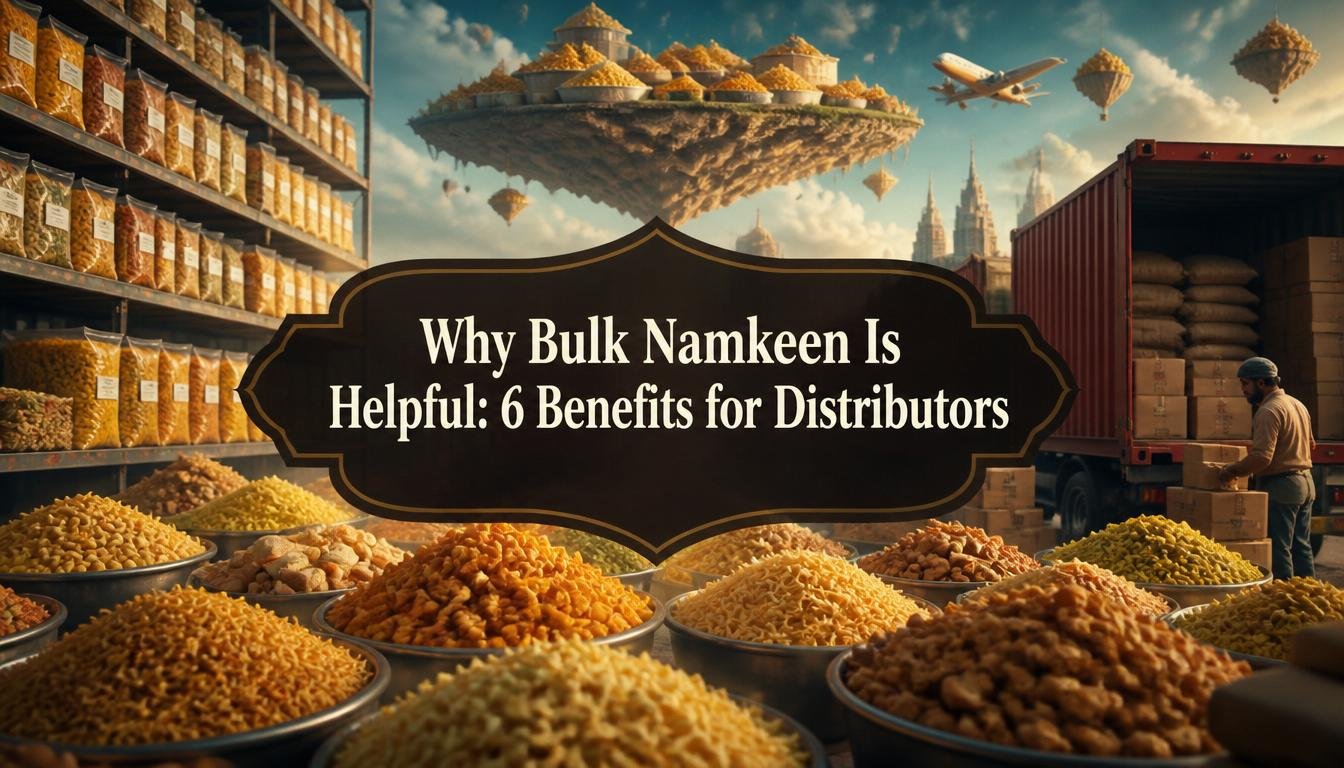
Why Bulk namkeen is helpful for distributors and retailers? because it combines a genuinely long shelf life with strong repeat-purchase demand, low spoilage risk relative to fresh snack categories, and real private-label upside for brands wanting to build their own snack line without building a factory. That combination is a big part of why packaged Indian snacks have grown from a regional category into a global, multi-billion-dollar export segment.
This guide covers the six specific benefits bulk namkeen sourcing brings to distributors, retailers, and private-label brands, and where each one matters most.
1. Long Shelf Life Relative to Other Snack Categories
Properly packaged namkeen — particularly in nitrogen-flushed, multilayer pouches — can hold freshness for up to six months or longer, a meaningfully longer window than many fresh or refrigerated snack alternatives. For distributors managing inventory across multiple markets or seasonal demand swings, that shelf life buys real operational flexibility: less pressure to move stock immediately, less spoilage-driven write-off, and more room to plan shipments around demand rather than expiration dates.
2. Consistent, Repeat-Purchase Demand
Namkeen sits in a genuinely defensive product category — it’s a habitual, repeat-purchase snack rather than a trend-driven impulse buy, which gives distributors a more predictable demand curve than many other packaged food categories. The branded segment of India’s namkeen market has been expanding at a notably faster rate than the overall market, reflecting a consumer shift from loose, unbranded snacks toward trusted packaged products — a shift that favors distributors carrying recognized, quality-consistent brands.
3. Strong and Growing Export Demand
Indian snack products are seeing growing demand well beyond diaspora communities, and international buyers in over 50 countries now source packaged namkeen from established Indian manufacturers. For distributors entering or expanding in international markets, this growing demand base means namkeen isn’t a niche ethnic-food play anymore — it’s a broadening mainstream snack category with real shelf space upside at retail.
4. Private Label and Custom Branding Upside
Namkeen manufacturing has matured to the point where private labeling is a standard, widely available service rather than a specialty request. For a distributor or retail brand, this means building a namkeen product line under your own brand is achievable without operating a factory — you’re sourcing a finished, export-ready product and applying your own packaging and branding on top of an established manufacturing and quality process.
This matters commercially because private-label products typically carry better margins for the distributor than reselling a manufacturer’s own branded product, provided the sourcing quality and consistency hold up.
5. Lower Operational Overhead Than Fresh or Frozen Snacks
Because namkeen is shelf-stable at room temperature, distributors avoid the cold-chain infrastructure, refrigerated storage costs, and tighter delivery windows that frozen or fresh snack categories require. That translates into simpler warehousing, more flexible delivery logistics, and lower overhead per unit moved — a real cost advantage when namkeen is one category within a broader, more complex product portfolio.
6. Product Range Flexibility Within One Category
“Namkeen” isn’t a single product — it spans bhujia, sev, mixture, moong dal, chana, and dozens of regional variations, plus a growing range of health-positioned options like baked, low-oil, multigrain, and gluten-free formats. This range lets a distributor build a diversified snack portfolio from a single, well-vetted supplier relationship, rather than needing to manage sourcing across many unrelated categories to offer variety on the shelf.
Where This Matters Most in Practice
- Wholesale grocery distributors building a shelf-stable Indian snacks category without cold-chain investment
- Private label and retail brands launching a branded snack line without operating their own production facility
- International retailers and specialty grocers responding to growing mainstream demand for Indian snack flavors
- Foodservice and HORECA buyers sourcing a consistent, long-shelf-life snack option for bulk service use
- E-commerce and quick-commerce sellers who benefit from namkeen’s shelf stability during variable fulfillment timelines
A Practical Limit Worth Knowing
Shelf life and quality both depend heavily on packaging format and oil freshness at the point of production — a supplier using standard pouches without nitrogen flushing will not deliver the same shelf-life performance as one using export-grade packaging, even for the identical recipe. This is why packaging specification, not just recipe quality, deserves direct scrutiny before placing a bulk order, covered in more depth in our bulk namkeen sourcing guide.
How Shanti Sons Foods Supplies Bulk Namkeen
We export namkeen and snacks alongside our spices, herbal powder, and spray-dried and freeze-dried fruit and vegetable lines, applying nitrogen-flushed export packaging and the same certification standards across our snack range. If you’re evaluating namkeen as a new category — whether reselling under our packaging or building a private label — our bulk namkeen supplier guide covers the specific checks to run before your first order, and our roundup of top Indian food export products covers how namkeen fits alongside our other categories if you’re building a diversified sourcing strategy.
The fastest way to confirm fit: request a trial shipment, test shelf life against your own storage conditions, and confirm the packaging format matches export-grade standards before scaling to a full container.
FAQ
Is namkeen a good category for a first-time private label snack brand? It can be, since manufacturing, packaging, and export processes are well established in this category, and minimum order quantities for private label are often more accessible than in less mature snack categories — confirm specifics directly with your chosen supplier.
How long does bulk namkeen actually last in transit and storage? With proper nitrogen-flushed, multilayer packaging, namkeen can maintain freshness for six months or longer, though this depends on the specific product’s oil content and the exact packaging format used.
Why is packaged namkeen growing faster than the overall snack market? Consumer preference is shifting from loose, unbranded snacks toward trusted, packaged products with consistent quality and longer shelf life, and the branded segment has been growing meaningfully faster than the category overall as a result.
Does namkeen require cold storage or refrigeration? No — properly packaged namkeen is shelf-stable at room temperature, which is one of its key operational advantages over fresh or frozen snack alternatives for distributors.
What’s driving international demand for Indian namkeen? Diaspora demand, growing mainstream interest in Indian snack flavors, and increasing retail and e-commerce availability are all contributing to expanding international demand well beyond India’s traditional export markets.
GO 4 EXPORT INDIA for consultation regarding Import and Export from India.