India’s spice exports crossed $4.5 billion in the latest reporting year, and food exports overall keep setting new records as global buyers diversify away from single-country sourcing. If you’re a distributor, manufacturer, or retail buyer scouting what to source from India in 2026, ten categories consistently top the list: spices, basmati and non-basmati rice, processed snacks, dehydrated and spray-dried fruit/vegetable powders, freeze-dried fruit, pulses, millets, herbal and botanical powders, marine products, and organic/certified specialty foods.
This guide breaks down why each category is in demand, who’s buying it, and what to check before you source it.
<!– Insert Table of Contents block here (Rank Math TOC block or compatible plugin) –>
Why Indian Food Products Are in High Global Demand Right Now
Three forces are driving this at once. First, global food buyers have spent the past few years actively diversifying supply chains away from over-reliance on any single country, and India’s scale and established export-compliance infrastructure make it a natural beneficiary. Second, demand for “clean,” tested, and certified food ingredients has risen sharply, pushing Indian exporters who invest in certification and quality systems into a stronger competitive position. Third, growing international recognition of Indian cuisine and ingredients — well beyond diaspora communities — has expanded the addressable market for Indian food products in mainstream retail, not just ethnic food aisles.
1. Spices and Seasonings
India remains the world’s largest spice exporter, with turmeric, red chili, cumin, coriander, and cardamom seeing especially strong international demand. The category is splitting into two tiers: commodity bulk spices, and a fast-growing premium segment of organic, single-origin, and regionally certified spices (Kashmiri chili, Coorg pepper) growing at 25–30% annually.
Buyers should confirm FSSAI, APEDA, and Spices Board registration, along with recent third-party lab testing for pesticide residue and heavy metals. For a full walkthrough, see how to import spices from India.
2. Basmati and Non-Basmati Rice
India became the world’s largest rice producer in 2024, and rice remains one of the highest-volume Indian food exports by value. Basmati commands a premium for its aromatic profile, while non-basmati varieties serve high-volume staple markets across Africa, the Middle East, and Southeast Asia.
Buyers typically care most about grain length consistency, moisture content, and broken-grain percentage — specs worth confirming per shipment rather than assuming consistency across suppliers.
3. Processed Snacks and Namkeen
Packaged Indian snacks — namkeen, bhujia, sev, and mixture varieties — are seeing rising export demand driven by diaspora markets and growing mainstream interest in Indian flavors. This is a category where packaging quality (nitrogen-flushed pouches to prevent oil oxidation) matters as much as the recipe itself for products traveling long distances by sea.
See sourcing bulk namkeen from India for the specific checks to run before ordering.
4. Dehydrated and Spray-Dried Fruit & Vegetable Powders
Spray-dried mango, beetroot, spinach, and amla powders are widely used as functional ingredients in beverages, bakery, and supplement formulations. India’s combination of proximity to major growing regions and established processing infrastructure has made it a go-to source for buyers formulating at scale.
Moisture content and carrier-agent transparency are the two specs to press hardest on. Full details in sourcing spray-dried fruit and vegetable powder from India.
5. Freeze-Dried Fruit
Freeze-dried mango, banana, strawberry, and jackfruit occupy the premium end of the dried-fruit category, prized for retained color, flavor, and nutrient content compared to conventional dehydration. Buyers in Japan, South Korea, and Singapore are especially demanding on batch-to-batch color and moisture consistency.
See freeze-dried fruit supplier vetting for the five specs that actually matter.
6. Pulses and Legumes
Chickpeas, lentils, and other pulses have moved well beyond their traditional role, now serving as a primary ingredient in hummus, plant-based meat, and protein-forward snacks internationally. For importers, pulses offer a notably stable demand profile with limited seasonality in retail consumption compared to more trend-driven categories.
7. Millets
Following India’s push around the International Year of Millets, jowar, bajra, ragi, and foxtail millet-based products — flours, cookies, pasta, puffs — have posted very strong annual growth, and export demand for sorghum and pearl millet is rising globally alongside the domestic health-food trend.
8. Herbal and Botanical Powders
Turmeric, moringa, ashwagandha, amla, and tulsi powders are seeing sustained demand growth from the global supplement, wellness tea, and natural cosmetics industries. This category carries a regulatory nuance most other food exports don’t: depending on formulation, a product may fall under FSSAI food regulation or AYUSH Ayurvedic drug classification, and buyers need to confirm which applies before sourcing.
Full breakdown in sourcing bulk herbal powder from India.
9. Marine Products
Shrimp and other seafood exports consistently rank among India’s highest-value food export categories by revenue, even though they sit outside the dry-goods and powder categories covered elsewhere in this guide. Buyers in this category should expect a heavier compliance load — cold-chain logistics and HACCP certification are non-negotiable rather than optional here.
10. Organic and Certified Specialty Foods
Across nearly every category above, a parallel premium tier exists for organic-certified, single-origin, or specially certified variants — commanding meaningfully higher margins than bulk commodity equivalents. Buyers building a differentiated retail or private-label brand should ask specifically about NPOP, USDA NOP, or EU Organic certification status, since this is a separate certification track from standard food-safety compliance.
How to Evaluate Any Supplier Across These Categories
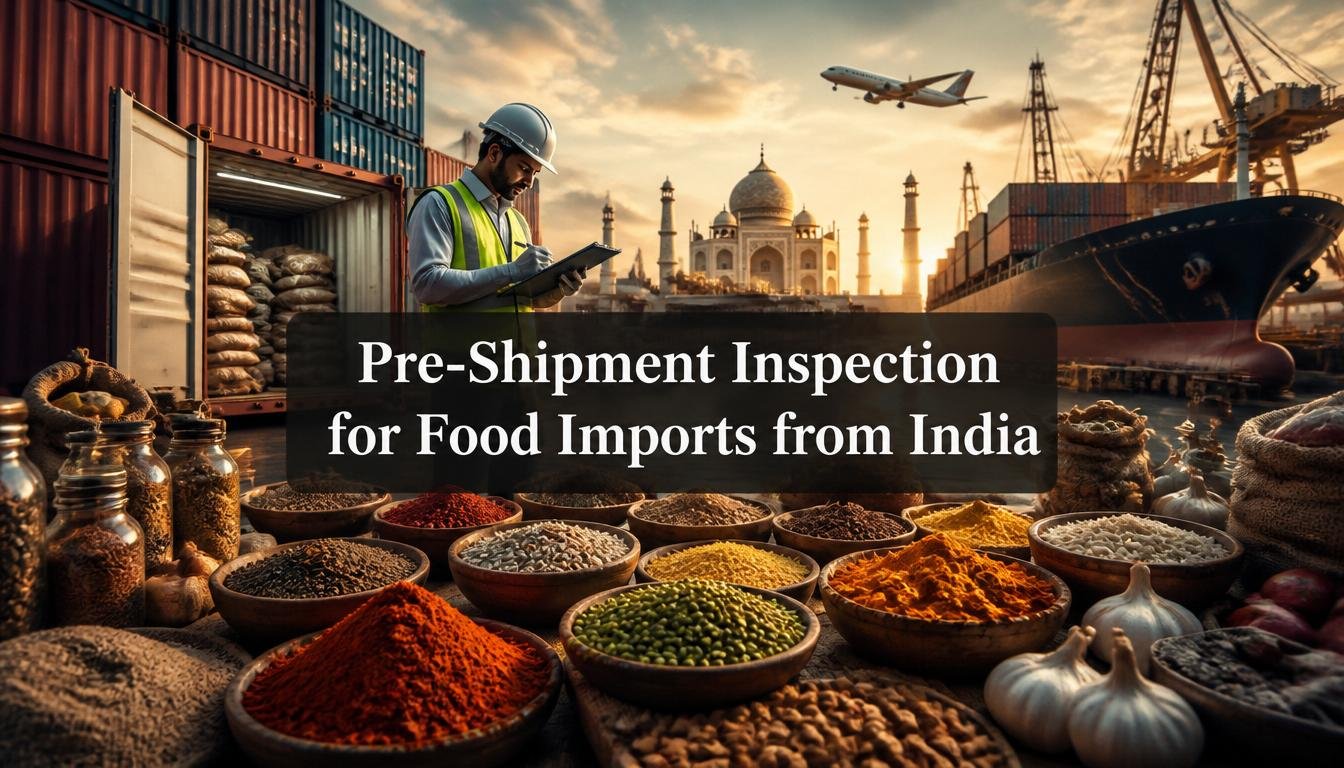
Regardless of which category you’re sourcing, the same core checks apply: confirm FSSAI and APEDA registration (verified directly with the issuing authority, not just a certificate PDF), request recent third-party lab testing results, get a real technical spec sheet rather than marketing language, and start with a trial or sample order before committing to a full container. Pre-shipment inspection through an agency like SGS or Bureau Veritas is worth building into your process from the first order, not adding once trust is established.
Common Mistakes When Sourcing Across Multiple Categories
- Assuming one supplier’s certification covers every product category. FSSAI, APEDA, and Spices Board registrations can be product-category specific — confirm coverage for each item you’re sourcing.
- Chasing the lowest bulk commodity price and ignoring the premium-tier opportunity. Certified, single-origin, and organic variants often carry meaningfully better margins than bulk equivalents in the same category.
- Underestimating category-specific compliance differences. Marine products need cold-chain and HACCP rigor; herbal powders may need AYUSH licensing; namkeen needs oxidation-resistant packaging — treating all food exports as equivalent risk profiles is a common first-time mistake.
- Not verifying government registration numbers directly. Cross-check FSSAI on the FoSCoS portal and APEDA registration through APEDA’s own system rather than trusting supplier-provided documents alone.
How Shanti Sons Foods Fits Across These Categories
We export across five of the categories in this list — spices and seasonings, namkeen and snacks, spray-dried and freeze-dried fruit and vegetable powders, and herbal powders — and run the same certification, lab-testing, and export-documentation process across all of them. If you’re evaluating multiple categories for a diversified sourcing strategy, that consistency is often the more valuable thing to look for in a supplier than finding the single cheapest quote in any one category.
FAQ
What is India’s top food export by value? Marine products and rice are consistently among India’s highest-value food exports by revenue, with spices close behind and growing rapidly in the premium and certified segments.
Which Indian food products are growing fastest in export demand? Millet-based products, herbal and botanical powders, and premium/organic-certified spices are among the fastest-growing categories, several posting 25%+ annual growth as global wellness and clean-label trends accelerate demand.
Is it better to source multiple food categories from one Indian supplier or specialize by category? This depends on your business model — a single supplier covering multiple categories can simplify certification verification and logistics, while category specialists may offer deeper expertise in a single product. Many buyers start with one category and expand within a trusted supplier relationship as it develops.
What certifications matter most across Indian food export categories? FSSAI and APEDA registration are baseline requirements across almost all food export categories from India, with additional category-specific certifications (Spices Board for spices, AYUSH for classical herbal formulations, HACCP for marine products) layered on top depending on the product.
Where can I find verified Indian food exporters by category? APEDA maintains a registered exporter database organized by product category, and APEDA also organizes international Buyer-Seller Meets connecting pre-qualified exporters with international buyers in target markets.
GO 4 EXPORT INDIA for consultation regarding Import and Export from India.