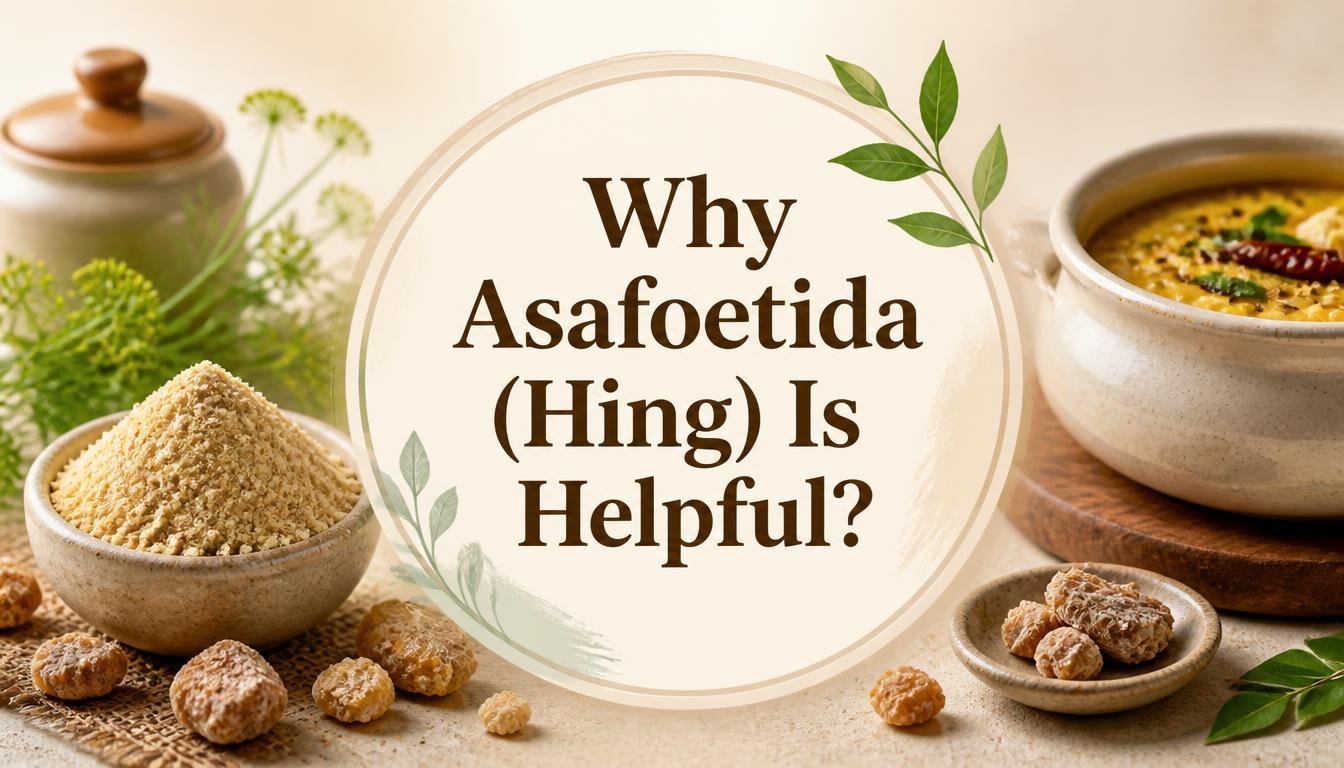
Ever wondered why asafoetida (hing) is helpful for manufacturers? Its because a small amount goes an extremely long way: it’s a potent, pungent oleo-gum-resin that’s rarely sold in its raw form because the concentration is simply too strong, and instead reaches the market as “compounded asafoetida,” diluted with rice flour, wheat flour, or gum arabic to a usable strength. For manufacturers formulating spice blends, seasoning powders, and packaged Indian food products, that combination of potency and standardized dilution is exactly why hing is treated as a precision ingredient rather than a bulk commodity spice.
This guide covers what makes hing genuinely different from other spices in this catalog, including a supply chain detail most buyers don’t expect: India doesn’t actually grow it.
The Detail Most Buyers Don’t Expect: India Processes It, But Doesn’t Grow It
This is worth understanding before anything else about hing. Unlike nearly every other spice India exports, asafoetida is not commercially cultivated in India at meaningful scale — the raw resin is imported almost entirely from Afghanistan and Iran, and India’s role is processing: purifying, compounding, and packaging it into the export-ready product international buyers actually purchase. India recently began cultivation trials to reduce this import dependence, but for now, sourcing hing from an Indian exporter means sourcing India’s processing expertise, not India-grown raw material.
That distinction matters for buyers evaluating supplier credibility — a hing supplier’s real value proposition is processing consistency and compounding accuracy, not agricultural sourcing claims.
1. Extreme Potency Means Precise, Small-Dose Formulation
A little hing goes a very long way — this is the defining functional characteristic manufacturers need to understand. Because raw asafoetida resin is too pungent and concentrated for direct food use, it’s almost always sold in compounded form, standardized to a specific flavor strength through dilution with rice or wheat flour. For manufacturers, this means dosing precision matters enormously — a formulation error with hing is far more noticeable than with a milder spice, making supplier consistency in compounding ratio a genuine quality differentiator.
2. Long Shelf Life and Stable Supply
Properly processed compounded asafoetida, packaged to preserve its moisture content and aroma, holds its flavor strength for an extended period, giving manufacturers a stable ingredient that doesn’t require the sourcing urgency of a perishable product. Combined with its concentrated dosing, this makes hing an easy ingredient to hold in inventory relative to its actual usage volume.
3. A Distinctive, Hard-to-Replace Flavor Function
In Indian cooking, hing is typically used in tempering (tadka) — bloomed briefly in hot oil at the start of cooking to release its aroma — where it contributes a savory, umami-adjacent depth that’s genuinely difficult to replicate with other ingredients. For manufacturers producing packaged dal, sambar, pickle, or spice blend products aimed at authenticity-focused markets, hing is often a non-negotiable ingredient precisely because there’s no easy substitute for the flavor function it performs.
4. Growing Demand Beyond Traditional Cuisine
Compounded asafoetida demand extends into cosmetics as an aromatic ingredient, alongside its established role in food processing, seasoning blends, and Ayurvedic and pharmaceutical applications. As international interest in Indian regional flavors and traditional ingredients continues expanding, packaged food manufacturers targeting authenticity-focused markets are increasingly building hing into snack seasoning and ready-to-eat product formulations, not just traditional home-style cooking applications.
5. A Genuine Value-Add Processing Story
Because India’s role is compounding and purification rather than cultivation, the processing step itself is where the commercial value gets added — raw resin becomes a standardized, food-safe, export-documented product through Indian manufacturing expertise. For buyers, this means the right question to ask a hing supplier isn’t “where do you grow it” but “how consistent and well-documented is your compounding process.”
6. Export Market Depth and Buyer Confidence
India is recognized as the world’s leading processor and exporter of compounded asafoetida, and demand is broad — the US, UK, UAE, Germany, Canada, and Australia are all active destination markets, alongside significant demand from the Middle East and South Asian diaspora communities globally, with the UAE alone accounting for a substantial share of India’s hing exports. That market depth gives buyers real choice among established, experienced Indian exporters.
Common Mistakes When Sourcing Asafoetida
- Assuming “asafoetida” means the same product across suppliers. Compounded asafoetida varies by dilution ratio and flavor strength — confirm the specific strength and formulation your recipe requires rather than assuming standardization across brands.
- Not asking about the compounding base. Rice flour and wheat flour versions behave differently for gluten-free formulation purposes — this is a critical labeling question, not a minor detail.
- Underestimating dosing sensitivity. Because hing is so potent, small formulation errors are more noticeable than with milder spices — request guidance on dosing ratio directly from your supplier for your specific application.
- Overlooking FSSAI and export documentation. As with any food export from India, confirm current FSSAI licensing and export documentation directly with the issuing authority, not just a supplier’s claim.
- Assuming India-grown origin. Since raw asafoetida resin is imported from Afghanistan and Iran, evaluate suppliers on processing quality and consistency rather than agricultural sourcing claims.
How Shanti Sons Foods Supplies Asafoetida
We supply compounded asafoetida alongside our broader spices and seasoning line, applying the same certification and quality-control documentation across our full spice range. If you’re formulating a spice blend, seasoning powder, or packaged Indian food product, our spice import and vetting guide and our piece on why bulk spices are helpful cover the certification checks and broader category context that apply here too.
The fastest way to confirm fit: request the specific compounding ratio and flour base used, test dosing against your formulation, and confirm current FSSAI and export documentation before scaling to a bulk order.
FAQ
Why is asafoetida sold as “compounded” rather than pure? Pure asafoetida resin is too pungent and concentrated for direct food use, so it’s diluted with rice flour, wheat flour, or gum arabic to a standardized, usable flavor strength before reaching the market.
Does India grow asafoetida, or just process it? Primarily just process it — the raw resin is imported almost entirely from Afghanistan and Iran, and India’s role has traditionally been purification, compounding, and export packaging, though recent cultivation trials aim to reduce that import dependence over time.
Is compounded asafoetida gluten-free? It depends on the compounding base — rice-flour-based versions are gluten-free, while wheat-flour-based versions are not. Always confirm the specific base with your supplier if gluten-free labeling matters for your product.
How much asafoetida is typically used in a formulation? Very small amounts — because it’s so potent, hing is typically used in pinch-level quantities relative to other spices, so precise dosing guidance from your supplier is worth requesting directly for your specific application.
Which countries import the most hing from India? The UAE, Nepal, USA, Malaysia, and Singapore are among the leading destinations for Indian asafoetida exports, with the UAE accounting for a significant share.
Reach out to GO 4 EXPORT INDIA for consultation regarding Import and Export from India.