Kala namak aka black salt is helpful in a way no other product in this catalog is: it’s the rare ingredient that has moved from a regional Indian condiment into a specific, high-value functional ingredient for the global plant-based food industry — because its natural sulfur compounds genuinely replicate the smell and taste of eggs, making it one of the few truly effective tools for building convincing vegan egg-flavor products. That crossover from traditional Indian spice to modern food-tech ingredient is a genuinely distinct commercial story in this content series.
This guide covers what makes kala namak functionally unique, why the plant-based food industry has adopted it specifically, and what to check before sourcing it in bulk.
What Kala Namak Actually Is
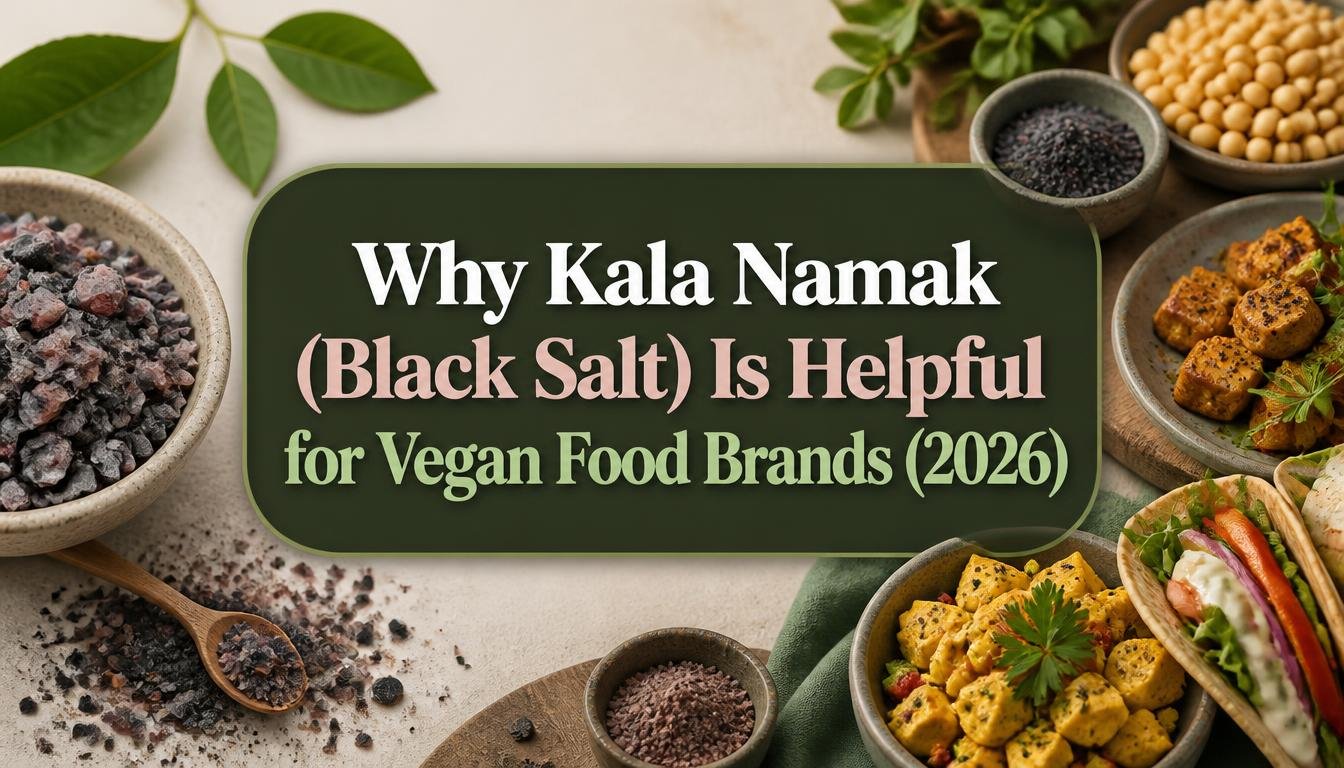
Kala namak — Himalayan black salt — is a mineral rock salt mined from deposits spanning Pakistan, northern India, and Nepal, traditionally processed by heating raw salt crystals at high temperatures in a kiln alongside charcoal and various herbs and seeds for an extended period. This processing gives the salt its signature sulfur compounds, including hydrogen sulfide, the same substance responsible for the aroma of cooked eggs. In rock form the salt is dark and blackish; once ground, it turns a distinctive pinkish-grey.
1. A Genuine Chemical Basis for Egg Flavor Replication
This is what sets kala namak apart from every other salt or seasoning in this catalog: its sulfur compound content isn’t a marketing description, it’s the actual chemistry behind why it tastes and smells like eggs. That’s precisely why plant-based food developers reach for it specifically — no other widely available natural ingredient recreates that flavor profile as convincingly, which has made kala namak a functional, not just traditional, ingredient for a fast-growing category of manufacturers.
2. A Real Sodium-Reduction Lever
Because kala namak’s flavor is so pronounced, formulators can often use less of it — or less additional salt overall — than they would with plain table salt to achieve an equivalent flavor impact, since the intensity of the sulfur and umami character carries much of the perceived seasoning. For brands working on sodium reduction without sacrificing flavor impact, this is a genuine formulation lever worth testing, rather than simply a seasoning swap.
3. Traditional Culinary Function That Still Drives Volume
Beyond its newer plant-based application, kala namak remains a core ingredient in chaat masala, chutneys, raitas, and a wide range of savory Indian snacks and street food, where its distinctive tangy, umami-forward flavor is essential rather than optional. This traditional demand base gives the ingredient a stable, established volume floor that the newer vegan food-tech application adds to, rather than an entirely speculative new category with no existing production infrastructure.
4. A Rapidly Expanding Application Base
Mainstream food media has documented kala namak’s shift from a South Asian pantry staple to what’s been described as a genuine breakout ingredient in vegan cooking, used in tofu scrambles, vegan egg salads, and plant-based mayo and dressing formulations specifically because it delivers a convincing eggy note that other seasonings can’t replicate. For manufacturers developing plant-based egg alternatives, mayo, or savory snack products, this expanding application base represents real, ongoing category growth rather than a passing trend.
5. Mineral Content Beyond Flavor Function
Kala namak carries a natural mineral profile including iron and other trace minerals from its rock-salt origin, which some formulators reference as a secondary nutritional contribution alongside its primary flavor role — worth noting as a functional attribute, though any specific nutrient content claim on packaging should be verified through your own lab testing and reviewed for compliance in your destination market rather than assumed from generic sourcing.
6. Confusion in the Market Worth Navigating for Buyers
“Black salt” as a term can refer to several genuinely different products — kala namak, Hawaiian black lava salt, and various Mediterranean black salts made by combining sea salt with activated charcoal are all sold under similar naming, despite being chemically and functionally unrelated. Buyers need to confirm they’re actually sourcing genuine kala namak with real sulfur compound content, not one of these other, cosmetically similar but functionally different black salts.
Common Mistakes When Sourcing Kala Namak
- Confusing kala namak with other “black salts.” Confirm you’re sourcing genuine Himalayan kala namak with documented sulfur content, not a visually similar but functionally different black salt product.
- Not specifying grind fineness. Fine ground kala namak is generally preferred for dispersal in tofu scrambles, dressings, and blended applications, while coarser grinds may suit certain traditional condiment applications — confirm which your formulation needs.
- Underestimating potency in formulation testing. Kala namak’s sulfur aroma is intense — test dosage carefully in your specific formulation rather than substituting for table salt at a straightforward 1:1 ratio.
- Overlooking sourcing verification for regional origin. Genuine kala namak comes from specific Himalayan mineral deposits — ask your supplier for documentation on sourcing origin as part of your quality verification.
- Assuming health claims transfer automatically. Mineral content claims (iron, other trace minerals) need your own lab verification and separate regulatory review before use on packaging, rather than being assumed from general sourcing information.
How Shanti Sons Foods Supplies Kala Namak
We export kala namak alongside our broader spices and seasoning line, with grind options suited to both traditional culinary applications and the growing plant-based food formulation market. If you’re developing a plant-based egg alternative or reformulating for sodium reduction, our spice import and vetting guide covers the certification checks that apply here too, and our piece on why amchur is helpful covers an adjacent functional flavor ingredient in the same supply chain.
The fastest way to confirm fit: request a sample, verify sourcing documentation and sulfur compound content, and test dosage against your specific formulation before scaling to a bulk order.
FAQ
Why does kala namak taste like eggs? Kala namak contains natural sulfur compounds, including hydrogen sulfide, the same compound responsible for the characteristic smell of cooked eggs — this is a genuine chemical property, not just a flavor description.
Is all “black salt” the same as kala namak? No — several unrelated products are marketed as “black salt,” including Hawaiian lava salt and various Mediterranean black salts made with activated charcoal. Confirm you’re sourcing genuine Himalayan kala namak specifically if the sulfur-driven egg flavor is what your formulation needs.
Can kala namak help reduce sodium content in a formulation? It can be a useful lever — because its flavor is so pronounced, less may be needed to achieve an equivalent perceived seasoning impact compared to plain table salt, though this should be tested directly in your specific formulation.
What products commonly use kala namak in plant-based food manufacturing? Tofu scrambles, vegan egg salad and sandwich fillings, plant-based mayo, and savory snack seasonings are among the most common applications, specifically chosen for the convincing eggy flavor kala namak provides.
How is kala namak traditionally processed? Raw rock salt is heated at high temperatures in a kiln, often alongside charcoal and various herbs and seeds, for an extended period, which develops its characteristic sulfur compounds and distinctive color.
Reach out to GO 4 EXPORT INDIA for consultation regarding Import and Export from India.